Table of Contents
What to Expect on the Kaʻena Point Trail
Looking for a fabulous hike with ocean views? Then the Kaʻena Point Trail is the perfect place for you. A magical, remote stretch of land with breathtaking natural scenery, birdwatching, and plenty of wildlife – visited by only a few tourists. Kaʻena Point is considered a Wahi Pana, a sacred place.

Up until the 1980s, Kaʻena Point could be reached by car, but the access roads were closed to protect the wildlife. Today, the area is only accessible on foot or by mountain bike, and the old roads now serve as hiking paths. There are two Kaʻena Point trails, one on the north side and one on the west side.

The northern entrance, Mokulē‘ia Entrance, is reached via Farrington Highway 930.
From the parking lot, you follow the road where the trail begins. It’s flat but completely without shade – this is the driest area on Oahu. In return, you’ll be rewarded with stunning views of the mountains, the ocean, and the North Shore.
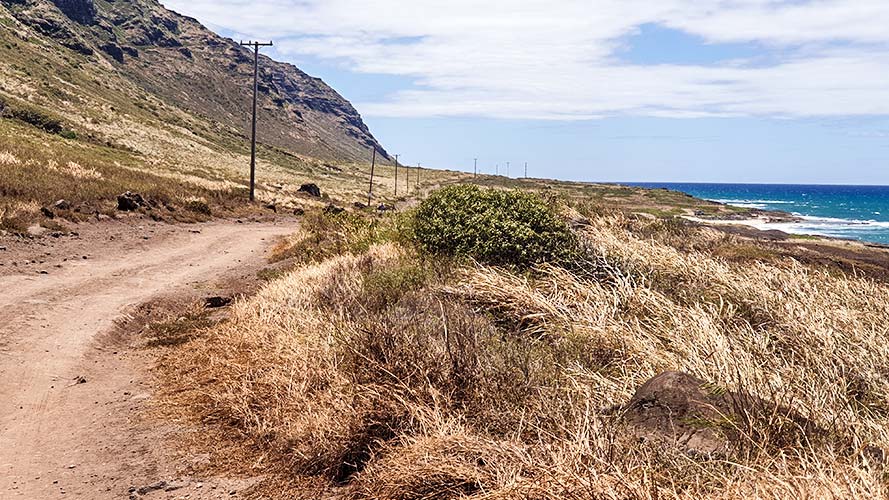
The western entrance, Wai‘anae Entrance, is reached via Farrington Highway 93. Here you’ll find a dramatically rugged coastline and the white sand of Yokohama Beach.
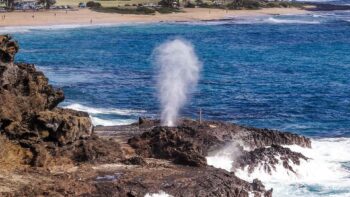
This trail follows the coast with views of steep cliffs and countless turquoise tide pools. Highlights include a massive sea arch forming a natural bridge into the ocean and several blowholes. With a bit of luck, you might even spot some of the area’s wild residents.

Once you reach Kaʻena Point, the landscape changes. The grassy plains of the north and the lava cliffs of the west give way to white sand and low bushes. You’ll also come across colorful bunkers – great photo spots and the perfect place to enjoy the spectacular view.
- Important: Bring water, sunscreen, and a hat!

- Discover: Discover more destinations and tour reports in our ultimate Oahu itinerary
The Kaʻena Point Trail in Action
Location on the Map
Our Honest Review & Rating
Both routes to Kaʻena Point are beautiful in their own way, and no matter which one you choose, you can’t go wrong. The unique scenery is unlike anything else on the island. Both hikes are easy since they are practically flat. Still, wear sturdy shoes, as the paths are sandy and lined with rugged volcanic rock.
Be sure to bring plenty of water and sunscreen, and start your hike either early in the morning or late afternoon to avoid the intense sun. Neither trail is suitable for strollers or wheelchairs.
Weather Independent
Spontaneous Booking
For all Fitness Levels
Accessibility
Tour Options, Duration & Cost
Organized Tour
There are no guided Kaʻena Point Trail Tours.
Self-Organized Tour
Duration: Plan on 1.5 to 3 hours, depending on your pace, and don't leave valuables in your car.
Cost: Both trails and parking are free.
Is the Kaʻena Point Trail Worth It?
For us, this was a huge, adventurous yes. It felt like we had found the wild, untouched side of Oahu. The trail is rugged, remote, and the scenery is completely different from anywhere else on the island.
Here’s our take on who will absolutely love the Kaʻena Point Trail:
- Hikers Who Want to Escape the Crowds: This is your spot. We hiked for long stretches without seeing anyone else. It felt like a true escape into nature, far from the hustle of Waikiki. It's a genuine off-the-beaten-path experience.
- Wildlife Watchers: The point is a protected seabird sanctuary, and it delivered! We saw majestic albatross during nesting season, and the highlight was spotting several Hawaiian Monk Seals lazing on the beach. It’s a fantastic place for nature photography.
- Anyone Looking for Dramatic Coastal Views: Both the Waiʻanae (west) and Mokulēʻia (north) sides offer spectacular, rugged coastline views. We personally loved the west side for its dramatic sea cliffs and arches.
On the other hand, it might not be the right fit if:
- You're not prepared for a long, hot hike. This trail is completely exposed to the sun with zero shade. It's a long, flat walk (around 5 miles round trip), and you absolutely must bring more water than you think you'll need, plus a hat and sunscreen.
- You have a rental car you're worried about. The parking areas at both trailheads are remote, and unfortunately, car break-ins are a known issue. We made sure not to leave a single thing visible in our car.
Our Final Word:
If you're an adventurous traveler willing to come prepared, the reward is immense. The feeling of reaching that wild, windswept point at the end of the island is unforgettable. It was one of our favorite raw, natural experiences on Oahu.
Where to Stay Near Kaʻena Point Trail? - Book Your Accommodation in Oahu
How to Get to Kaʻena Point Trail
With an Organized Tour
There is no guided Kaʻena Point Trail tour.
On Your Own (Self-Organized)
Unfortunately, you can't get to Ka'ena Point by public transport. But by car, you can reach both starting points perfectly, don't leave anything in the car. If you want to go the Wai'anae route, your parking area is at Ka'ena Point State Park. If you like to hike the Mokule'ia route, drive towards Waialua, and about 1 mile past Camp Erdma, you can park.
- Find the Best Price: Renting a car gives you total freedom on Oahu. Use our comparison tool to instantly find the cheapest rate available. Compare car rental prices and save.
What to Pack & Prepare
Kaʻena Point Trail: Frequently Asked Questions (FAQ)
Which side of the Kaʻena Point Trail is better to hike, the North Shore (Mokulēʻia) or the West Side (Waiʻanae)?
Both trailheads offer a uniquely beautiful experience, and the “better” side depends on your preference.
The West Side (Waiʻanae) is more dramatic and rugged, featuring stunning sea cliffs, tide pools, and natural sea arches. It feels more remote and wild.
The North Shore (Mokulēʻia) side is generally flatter and easier, with a sandier path and incredible views of the North Shore coastline. It is also often less crowded.
For dramatic scenery, choose the West Side. For an easier, more peaceful walk, choose the North Shore.
Is the Kaʻena Point Trail safe?
The trail itself is generally safe as it follows a wide, flat old vehicle road. However, there are important safety considerations. There is absolutely no shade, water, or facilities on the trail, so you must bring plenty of water, sunscreen, and a hat to protect against sun exposure and dehydration.
Additionally, car break-ins have been reported at both trailheads. It is crucial not to leave any valuables in your car. Hike with a friend if possible and be aware of your surroundings.
What kind of wildlife can I see at Kaʻena Point?
Kaʻena Point is a protected nature reserve and a fantastic place for wildlife viewing. The area is a nesting ground for seabirds like the Laysan Albatross (primarily from November to July) and Wedge-tailed Shearwaters.
You also have a very high chance of seeing Hawaiian Monk Seals, one of the most endangered seal species in the world, resting on the beaches. During the winter months (December to April), you can often spot Humpback Whales breaching offshore.
Explore More: Tours Near Kaʻena Point Trail


Share Now
Jetzt Teilen